
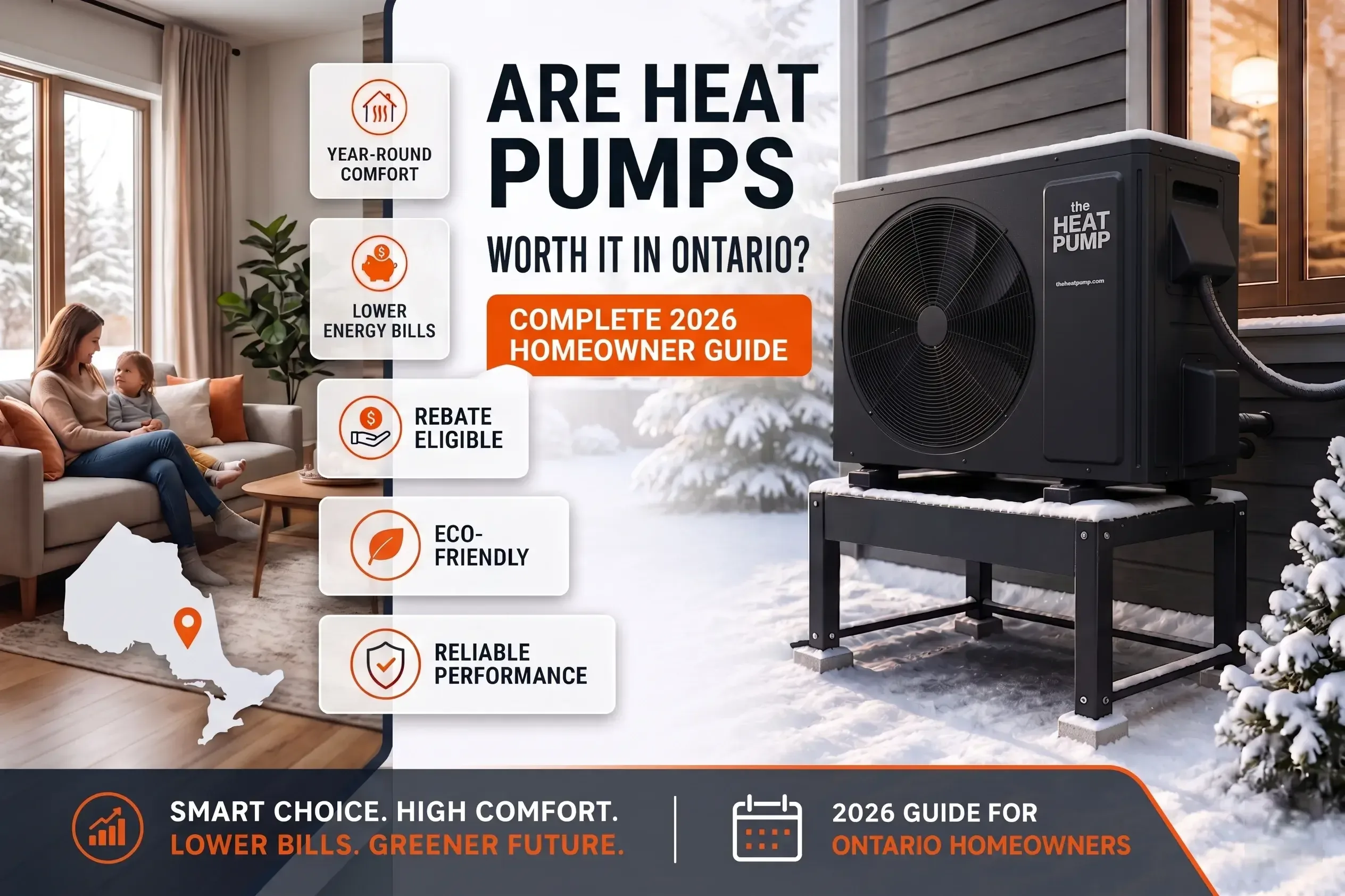

Are Heat Pumps Worth It in Ontario? Complete 2026 Homeowner Guide
With rising energy costs and growing demand for energy-efficient homes, more Ontario homeowners are switching to heat pumps than ever before. But one question still comes up regularly: can a heat pump really handle a Canadian winter?
The short answer is yes, but with one important condition. Modern cold-climate heat pumps are designed for Canadian weather, and when they are sized and installed correctly, they can deliver both comfort and savings throughout the year.
In this 2026 guide, we break down how heat pumps perform in Ontario, how they compare to furnaces, what rebates may be available, and what homeowners should know before making the switch.
How Heat Pumps Work in Ontario’s Climate
Many homeowners assume heat pumps stop working when temperatures drop below freezing. That is no longer true for modern cold-climate systems. Today’s heat pumps are built to operate in Canadian winters and provide both heating and cooling year-round.

They can typically:
- Operate efficiently down to around -10°C
- Remain functional in temperatures as low as -30°C
- Provide year-round heating and cooling
- Work best in a dual-fuel or hybrid system
For extreme cold, the most efficient setup is often a dual-fuel system that pairs a heat pump with a gas furnace. The heat pump handles mild and moderate temperatures efficiently, while the furnace takes over during deep cold snaps.
Heat Pump vs. Furnace in 2026
The choice between a heat pump and a furnace often comes down to upfront cost, long-term savings, and the specific needs of your home.
Heat Pump Advantages
- Lower energy consumption for most of the year
- Provides both heating and air conditioning
- Eligible for many government rebate programs
- Reduces carbon footprint
Furnace Advantages
- Lower upfront installation cost
- Handles extreme cold without backup
- Familiar technology for many homeowners
Hybrid systems that pair a heat pump with a gas furnace remain attractive because they combine efficiency with reliability.
The Financial Picture: Costs, Savings, and Rebates
One of the biggest questions Ontario homeowners ask is whether a heat pump will actually save money compared to a traditional furnace or air conditioner.
Your return on investment depends on several factors:
- Your current heating source, such as electric, oil, propane, or natural gas
- The size and insulation quality of your home
- Available utility or government rebates
- The difference between installation cost and monthly energy savings
Many HVAC companies also offer monthly payment plans and free in-home assessments to help calculate your potential savings. Quality installations usually include full parts and labour warranties.
While rebate amounts can vary by program and utility, hybrid systems continue to qualify for major incentives. Missing out on those programs is one of the most common mistakes homeowners make.
What Ontario Homeowners Should Know Before Buying
Service quality and installation expertise matter just as much as the equipment itself. Before purchasing a heat pump, it is worth asking the right questions.

Questions to ask your contractor
- Is the contractor licensed and TSSA-certified?
- Does the company have verified customer reviews?
- Will they service all makes and models?
- Is 24/7 emergency service available?
- What warranty is offered on parts and labour?
Homeowners who work with licensed, insured contractors often report higher satisfaction with their installations. A strong HVAC company should be able to service furnaces, central air conditioners, heat pumps, boilers, and water heaters, regardless of brand or age.
Why Professional Installation and Maintenance Matter
A heat pump is only as good as the installation behind it. Choosing the wrong size, skipping maintenance, or hiring an unqualified contractor can cancel out the savings and comfort benefits.
What to look for in an HVAC contractor
- TSSA certification
- Full liability insurance
- 24/7 emergency service availability
- Service for all makes and models
- Positive verified customer reviews
Why annual maintenance is worth it
Annual maintenance can reduce the likelihood of a mid-season breakdown and help extend the lifespan of your equipment. A standard maintenance plan often includes:
- Fall furnace tune-ups
- Spring AC or heat pump tune-ups
- Filter replacement
- Electrical and safety checks
- Refrigerant and coil inspection
- Priority emergency service and discounted calls
The Bottom Line
Heat pumps are one of the smartest investments Ontario homeowners can make for year-round comfort and energy efficiency, especially when paired with a gas furnace in a hybrid system.
However, proper sizing, professional installation, regular maintenance, and taking advantage of available rebates are essential to getting the best performance from your system.
If you are considering installing or upgrading a heat pump, working with a trusted local HVAC expert can make the process easier, more reliable, and more cost-effective.